
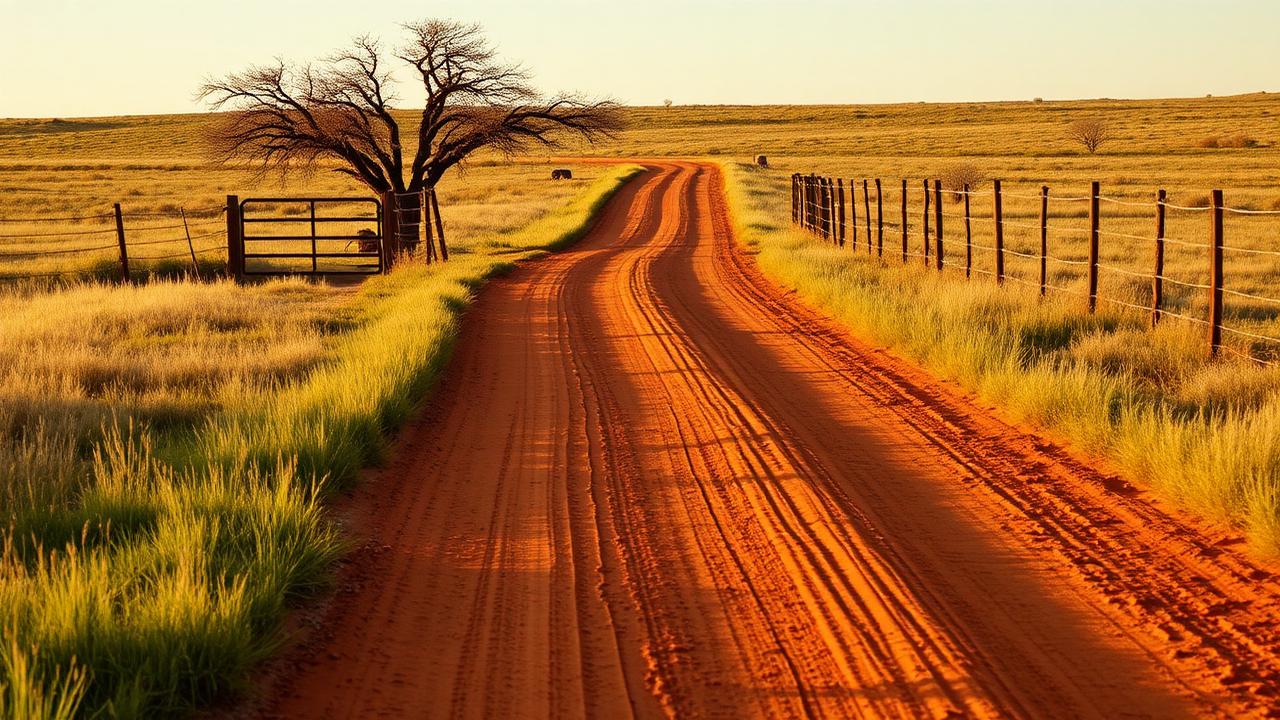
Native Dirt / Improved Dirt Road
The simplest option — clear, grade, and compact the existing native soil for low-traffic access.
ABOUT THIS ROAD TYPE
A native dirt road is the most basic and affordable ranch road option. It involves clearing the road corridor, grading the existing native soil into a proper road shape with drainage crown, and compacting it. In the Hill Country, the native rocky limestone soil actually makes decent road material when properly shaped and compacted — it's not the soft clay dirt you'd find in East Texas. An improved dirt road takes this a step further by adding a thin layer of caliche or gravel on top for better durability. For low-traffic ranch roads, seasonal access, or roads that will be upgraded later, native dirt roads get the job done at a fraction of the cost of imported materials. They're the starting point — and many Hill Country ranch roads have been native dirt for decades.
ADVANTAGES
- Lowest cost ranch road option by far
- Quick to build — just clear, grade, and compact
- Fine for low-traffic or seasonal use
- Hill Country limestone soil holds up better than clay
- Can be upgraded with material overlay later
- No material hauling costs (uses what's already there)
CONSIDERATIONS
- Washes out in heavy rainstorms
- Can become muddy and impassable in extended wet weather
- Requires the most frequent re-grading of any road type
- Not suitable for regular heavy equipment or trailer traffic
- Dust is significant in dry conditions
- Performance depends entirely on native soil quality
HOW WE BUILD IT
- 1Clear vegetation, brush, and trees from road corridor
- 2Remove topsoil and organic material from road surface
- 3Grade native soil into road shape with proper drainage crown
- 4Install culverts at drainage crossings and low spots
- 5Compact with roller or loaded equipment passes
- 6Optional: spread thin caliche or gravel cap and re-compact
MATERIALS USED
ONGOING MAINTENANCE
- Grade 2–4 times per year depending on weather and traffic
- Fill washouts and ruts promptly to prevent worsening
- Maintain drainage crown shape after every grading
- Add spot material to chronic problem areas
- Keep vegetation cleared from road edges and ditches
BEST FOR
- Low-traffic interior ranch roads
- Seasonal or occasional-use access routes
- Temporary construction access
- Roads that will be upgraded in the future
- Budget-limited property improvements
ESTIMATED COST
$1,500 – $3,500
per 1/4 mile (12 ft wide)
Cost is primarily equipment time for clearing and grading. Adding a thin caliche or gravel cap brings the cost closer to $3,000–$5,000 per quarter mile but significantly improves durability.
* Prices are approximate and vary by terrain, access, material source distance, and project specifics. Contact us for a free estimate.
NEED A ROAD BUILT?
Call or text us for a free estimate on native dirt / improved dirt road construction or repair.
Serving Boerne, Kerrville, Mountain Home, Fredericksburg & the Texas Hill Country.